The Sons of Kemet: Jazz, Ancient Egypt, and Afrofuturism
The Sons of Kemet is a British jazz group playing a brand of jazz inspired by Caribbean folk, rock, and African music. Known for their up-beat dance music and catchy saxophone licks, the group is led by front-man and saxophonist Shabaka Hutchings. Hutchings is backed up by Theon Cross on Tuba, and both Seb Rochford and Tom Skinner on drums. In 2021 the group released its fourth album, Black to the Future.
The name of the group itself draws on ancient Egypt. The group is named after kmt, a term ancient Egyptians used to references themselves. Hutchings sees the word as representative of Black identity. He draws that interpretation from anthropologist Cheikh Diop, who in his 1980 work The Origins of the Ancient Egyptians, translates kmt as “the negroes (p. 41).” Diop describes the term as “a collective noun which thus described the whole people of Pharaonic Egypt as a black people (p. 42).”
As straightforward as this may sound, the term kmt is at the center of a vigorous scholarly debate over the ethnicity of ancient Egyptians. While Afrocentric scholars like Diop hold that kmt refers to the land of black people, other scholars hold that it refers to the land of black soil. While this may seem like an ancillary difference, divergent interpretations of the word kmt have a range of consequences when it comes to the debate over race and ethnicity in ancient Egypt.
One one side of the question stands a more traditional branch of Egyptology. Duane Roller, professor Emeritus at Ohio State University is representative of a line of thought that considers questions of race and ethnicity outside the scope of the classics discipline. Regrading the debate over Cleopatra’s ethnicity, Roller writes “It is unlikely that Cleopatra cared about her racial makeup, but people over 2000 years later still obsess about it, thus trivializing her accomplishments.”
Many, if not most scholars generally agree that the Egyptians would not consider themselves Black in the modern sense of the word. Kathryn Bard of Boston University writes, “Egyptians were the indigenous farmers of the lower Nile valley, neither black nor white as races are conceived of today.” Scholars such as Bard rightly point out that ancient people did not see themselves in terms of modern racial categories (specifically Black vs. white), and retroactively applying those categories to them would be anachronistic.
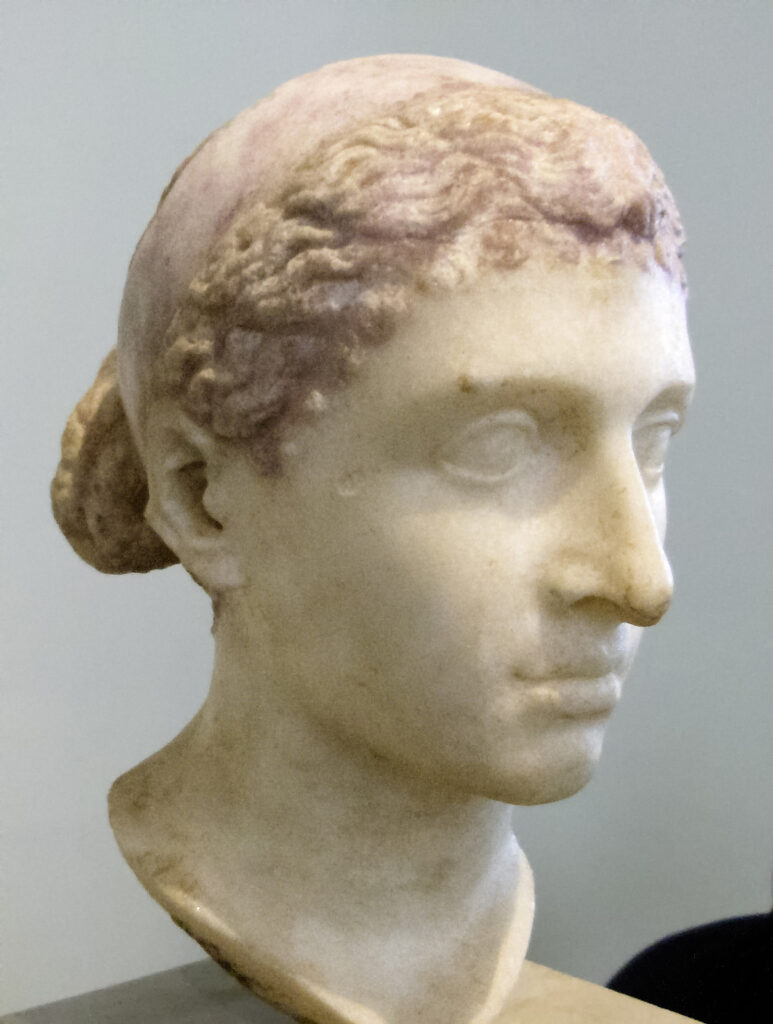
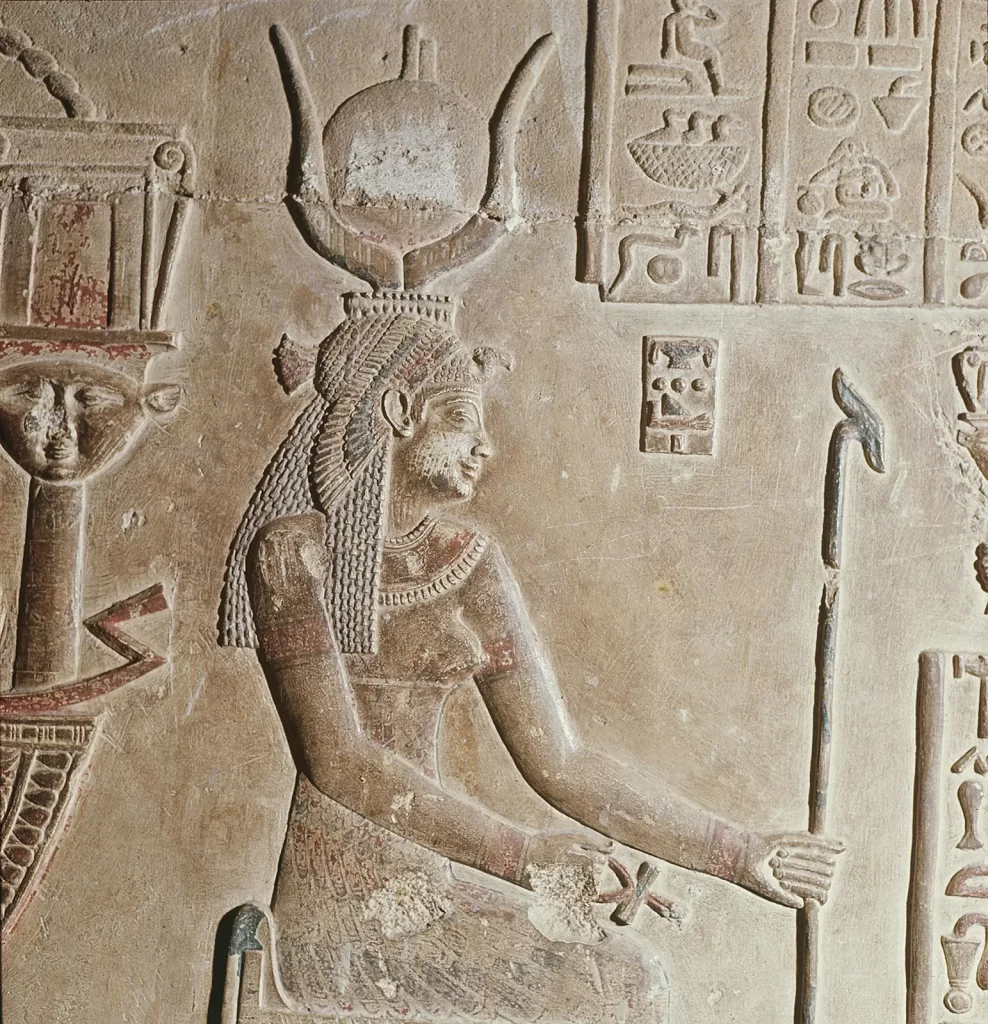
Scholars like Diop, who represents the Afrocentric wing of Egyptology, don’t accept this. While Diop understands that Egyptians obviously did not think in modern terms of Black and white, he insisted that they nevertheless saw themselves as Black. He sees his work as combating efforts on the part of traditional scholars to erase African history.
“[kmtjw and kmt] are the only adjectives of nationality used by the Egyptians to designate themselves and both mean ‘negro’ or ‘black’ in the Pharaonic language. Scholars hardly ever mention them or when they do translate them by euphemisms such as the ‘Egyptians’ while remaining silent about their etymological sense.”
Diop, a Senagalese scholar who studied in Paris, wrote in a colonial and early post-colonial context. He was a strong believer in pan-Africanism as a means of retaking power in post-colonial Africa. He wishes not only to write history, but to “restore the historical consciousness of the African peoples and reconquer a Promethean consciousness (p. xv).”
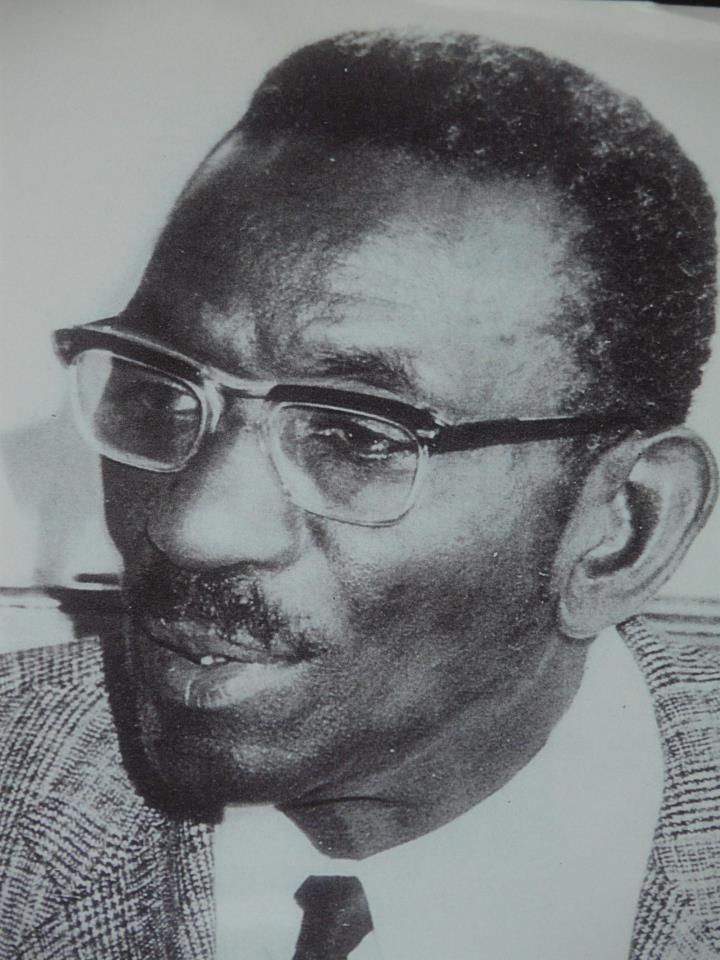
This may seem outside the aims of history or classicism. Historians do not usually explicitly state their political goals at the outset of their work. But Diop argues that traditional scholars have been erasing African history just as explicitly as he is trying to re-write it. He argues that traditional classical history promotes the idea that “Blacks are nonexistent culturally and historically (p. xvi).”
This brings us back to the Sons of Kemet, and specifically their latest album, Black to the Future. The album was inspired by Diop’s work. In an interview with The Quietus, Hutchings said, “If you consider that humanity did start in Africa, then we’re trying to go to a point where we’re acknowledging what those principles are and seeing how we can contextualize them for our modern day.” Hutchings’ efforts to acknowledge and develop ancient African principles in the modern day are a shining example of what Diop advocated for in The African Origins of Civilization.
Diop and Hutchings are similar in another way too. Both are products of a colonial history. Diop was Senagalese, working and studying in the colonial metropole of Paris. Hutchings was born in London, but lived most of his childhood in Barbados before returning to the UK. Like Diop, Hutchings wants to re-center traditional historical narratives around Africa. In The Africa Origins of Civilization Diop wrote, “The ancient Egyptians were Negros. The moral fruit of their civilization is to be counted among the assets of the Black world. Instead of presenting itself as an insolvent debtor, that Black world is the very initiator of the ‘western’ civilization flaunted before our eyes today (xiv).”
“We now know that all music comes from Africa,” said Hutchings in an interview with Huck magazine. “[Naming the group Sons of Kemet] is part of getting the word out there because people don’t know that Kemet/Egypt was a civilization or that the links between Egypt and Ancient Greece formed what we think of as Western philosophy. The intention is that people hear the music, read a bit more and come into contact with that whole body of information and history.”
Hutchings is a proponent of Afrofuturism, an aesthetic and philosophical movement that owes it’s origins to Diop himself. In the words of scholar Bennett Capers, Afrofuturism is about “forward thinking as well as backward thinking, while having a distressing past, a distressing present, but still looking forward to thriving in the future.” Afrofuturism is “an intersection of imagination, technology, the future and liberation.
These ideas clearly draw on Diop’s vision of “a modern Africa reconciled with its past and preparing for its future.”
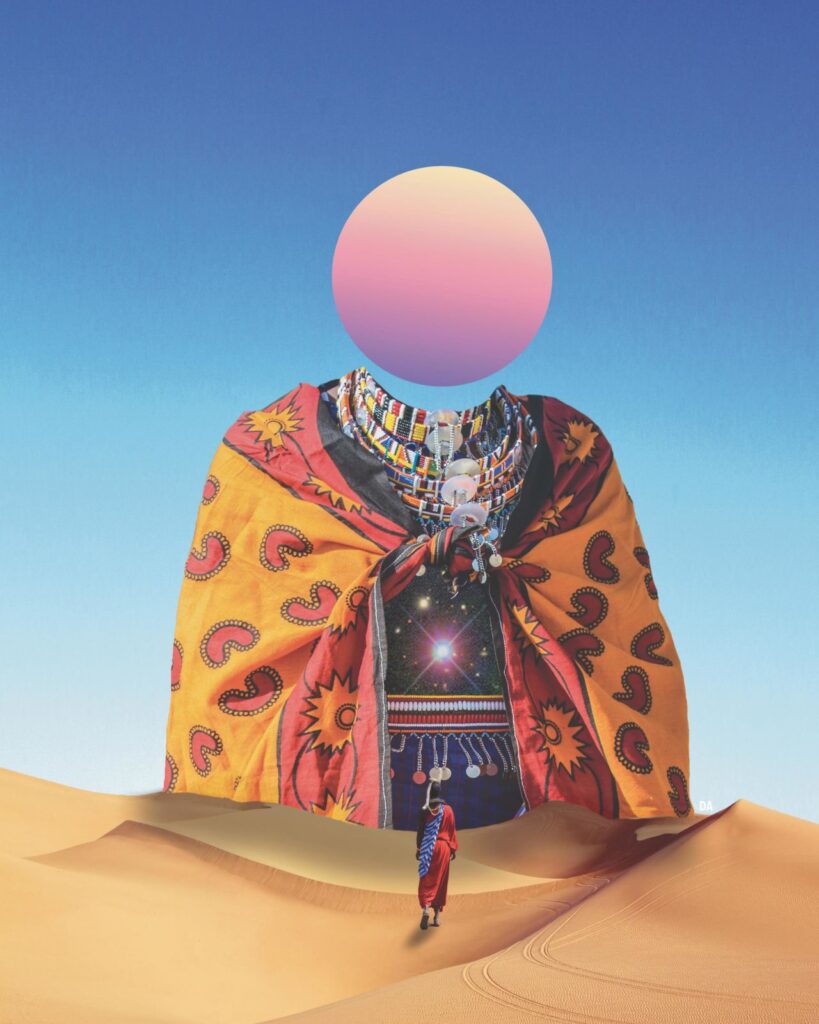
That’s why it’s called To Never Forget The Source,” said Hutchings in his interview with The Quietus , referring to a song off the Sons of Kemet’s latest album. “Because if we forget where we’ve come from, then we’re just drifting off into confusion.” Hutchings’ music draws themes from what Diop would call the history of Black Africa, which necessarily includes Egypt, and works to shape and advance them into the future. “The Source refers to the principles which govern traditional African cosmologies/ontological outlooks and symbolizes the inner journey,” wrote Hutchings. Hence the album name, Black to the Future.
Hutchings’ name itself reflects the past. Hutchings’ is named after Shabaka, a pharaoh of Egypt who reigned from 705 to 690 BC. Shabaka was one of the 25th dynasty kings, a group of rulers who came from the Kingdom of Kush or Nubia in Upper Egypt (towards the interior of the continent) in present day Sudan and southern Egypt. The Nubians and the Egyptians had a complicated relationship over time: sometimes at war, sometimes trading, sometimes intermingling. In the middle of the 8th century BCE (around the 750s), Egypt was in the midst 3rd intermediate period, a time of strife and instability characterized by a lack of strong and stable dynastic rulers.
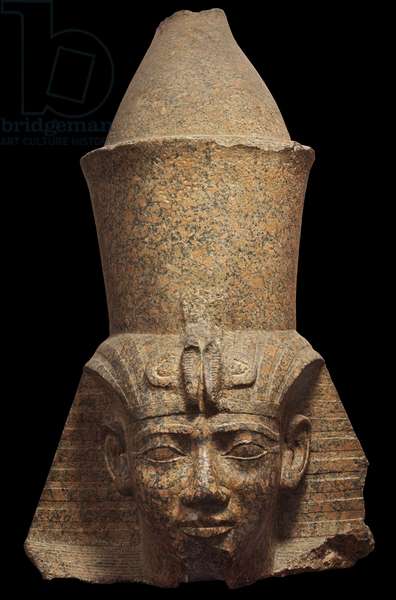
The Nubians took advantage of this instability, expanding northward into what was once Egyptian territory. Eventually, led by Piya, the Nubians conquered all the way up to Memphis, Egypt’s traditional administrative capital. However, Piye returned to Nubia. He conquered and controlled much of Egypt, but preferred to rule from the traditional Nubian capital of Napata.
The Nubian dynasty would reach new heights when Shabaka (Hutchings’ namesake) came onto the scene. Shabaka took complete control of Egypt between 716 and 712 BCE. Instead of ruling from Napata like his predecessors, Shabaka ruled from Thebes in Egypt. There is some dispute whether the conquest of Egypt first happened under Shabaka or his predecessor Shebiktu, but regardless Shabaka was one of the first 25th dynasty rulers to have control over all of Egypt.
Shabaka, although a Nubian was very much a fan of Egyptian culture.’ Papyri of the period refer to rulers like Shabaka with the title Pharaoh, the same as they would for previous rulers who were native Egyptians: “both “pir’u of Musri” (“pharaoh of Egypt”) and “ruler of Nubia” (Meluhha) are valid cuneiform titles for Nubian kings ruling Egypt.”
Shabaka figuratively ‘put on the pharaoh hat’ and participated in the performative aspects of being a pharaoh. This can be seen from statues and iconographic representations of him, which include a statue he erected of himself in Karnak in which he is literally wearing the Pharaoh hat, the twin crowns of Egypt. Shabaka’s performative aspect of pharaohship was not unique to Shabaka. Many pharaohs from outside the Nile Delta, including Libyans from West of Egypt, other Nubians, and eventually Greeks and Romans.
For example, Ptolemy I Soter was a Macedonian general under Alexander the Great. After Alexander conquered Egypt Ptolemy was appointed the provisional ruler. Once Alexander died, Ptolemy proclaimed himself pharaoh, and legitimized his rule participating in the performative aspects of being pharaoh. He was assigned his own cartouche, or hieroglyphic pharaonic title, and represented himself in statuary in traditional pharaonic fashion.
Ptolemy and Shabaka both demonstrate that the role of pharaoh was not limited by what we would think of as one’s ethnic background. The role of performative, not essentialized. It was about doing the Egyptian, pharaoh things, not necessarily being Egyptian by blood.
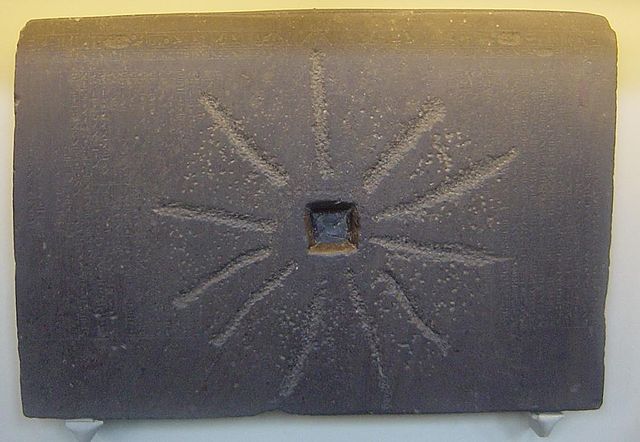
Shabaka himself was enthusiastic about Pharaonic culture. He was something of a history buff, seemingly interested in the already ancient past of Old and Middle Kingdom Egypt, which occurred millennia before his rule. The most famous result of Shabaka’s historical interests is the Shabaka stone. Shabaka constructed the stone originally in the temple to the god Ptah in Memphis. The stone claims to be a copy of an Old Kingdom text, but the content of the stone is now considered original to its time of its creation in the 25th dynasty.
The stone is important because “it illustrates the ability of the Egyptians to think in quasi-philosophical terms.” The stone put forth Ptah as a creator God, and claimed that the other Heliopolitan Gods such as Set, Horus, and Osiris were simply manifestations of him. The text served the political purpose of theologically legitimizing the rule of the Nubians over the two lands of Upper and Lower Egypt.
According to scholar J.H. Taylor, the Nubian pharaohs of the 25th Dynasty sought to establish an “ideological link with the great eras of Egypt’s past… leading to a revival of artistic, literary, and religious trends drawing inspiration from earlier eras (p. 331-32).”
Shabaka Hutchings’ Afrofuturism represents the same ideas. Ideas that Diop had in mind when he wrote of “a modern Africa reconciled with its past and preparing for its future.” In an interview with Huck magazine, Hutchings referenced British-Ghanaian artist Kodwo Eshun’s idea of a “poetizisation of the past.” That poeticization, so present in Hutchings’ work, cannot exist if there is no past to poeticize, if, in the words of Diop, “Blacks could not break with the idea that Blacks are nonexistent culturally and historically.” In order to poeticize an Egyptian past, “the moral fruit of [Egyptian] civilization must be counted among the assets of the Black world.” Afrofuturism and Hutchings draw upon ideas claim that African past as a vision for an African future.
“I really like that idea of taking something from the past that we take as a given or take as a stigma, but actually making it poetic, re-framing it in a way that we decide,” said Hutchings “… taking a traditional idea or an idea that’s static in the context of tradition and reframing it, adding other elements and flipping it on its head to make it into something that’s malleable and forward-moving.”
Works Cited:
Bodine, Joshua. “The Shabaka Stone: An Introduction.” Studia Antiqua 7, no. 1 (January 29, 2016). https://scholarsarchive.byu.edu/studiaantiqua/vol7/iss1/3.
Diop, Cheikh Anta. “Origin of the Ancient Egyptians.” In General History of Africa, II: Ancient Civilizations of Africa, 1980.
———. The African Origin of Civilization Myth or Reality. New York: Lawrence Hill Books, 1974.
Li, Jean. “Tradition, Innovation and a Search for Egyptian Identity in the Third Intermediate Period.” In Women, Gender and Identity in Third Intermediate Period Egypt. Routledge, 2017.
vinogradov, a k vinogradova k. “Shabaka.” In Dictionary of African Biography. Oxford University Press, 2011. https://www.oxfordreference.com/view/10.1093/acref/9780195382075.001.0001/acref-9780195382075-e-1858.