By Marcos Acero-Blyshak
The Greeks speak of tales from Egypt regarding their construction of a great library and the prosperous city of Alexandria. They say that the origin of their gods can be traced back to Egyptian deities, and the social practices of men and women there are so backwards that they are not seen anywhere else in the world. The Romans depict people’s houses on boats floating in the Nile, surrounded by creatures with the head of one animal and the body of another.
Of course, while some of these stories may be true, many others are certainly not. Yet, it appears that as we travel farther away from the Mediterranean coast, these foreign stories get wackier and wackier. We begin to stray away from what Europeans can immediately recognize as civilization towards a wilderness that is only documented by a small number of explorers. We enter the region of Amazigh tribes, pass through parched wadis, and find that burial sites have turned into simple holes in the ground. We come across people called Ethiopians living in the marshes beyond other human interaction. We eventually reach a land that is deemed utterly worthless and infested by wild beasts, the furthest that Greeks, Romans, or Phoenicians had traveled into Africa as of that point. A strange group of people lived in these parts. They were cave dwellers, who could run faster than any man on Earth. They ate snakes and lizards, and they sounded like screeching bats in comparison to all other languages. These people were known as “Troglodytes” to the Greeks and Romans, who told fantastic stories about them.
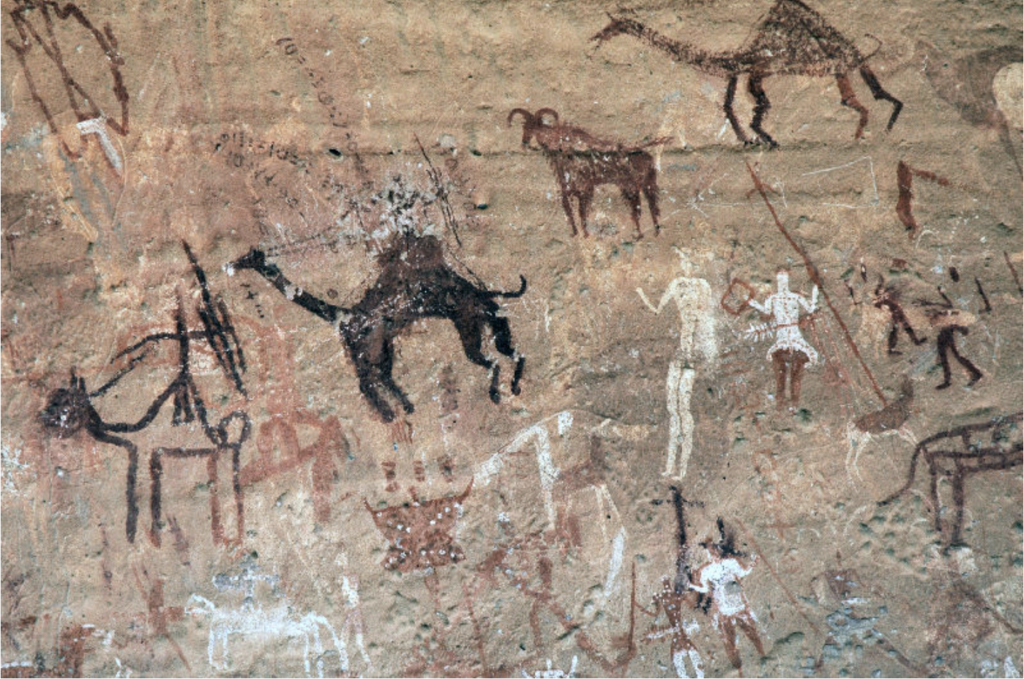
Troglodytes, or Troglodytae as the Greeks referred to them, were the common Greco-Roman name for people thought to occupy the mountainous lands in the Saharan desert and beyond. Herodotus also calls them Ethiopian cave dwellers; however, the term “Ethiopian” in this context does not refer to people of modern day Ethiopia. Rather, here it means “people with burnt faces” and was in fact the usual name for native African populations extending between the west and east coasts of the continent. That being said, these so-called “troglodytes” must have encompassed a vast number of different tribes, which have been described by various historians and geographers from Rome and Greece. We shall reconstruct the foreign depiction of troglodytic identity and that of other “exotic” Ethiopian peoples and examine how strange and peculiar these Greco-Roman stories of Africa could become while gathering as much historical truth as we can. Ultimately, though, does the Greco-Roman understanding of these peoples influence our perception of Africa in general? And if so, how much?
Ethiopians through Agatharchides and Diodorus Siculus
Starting from the coast of the Red Sea, Agatharchides mentions a people known as the Rhizophagians, which means “root-eaters.” These barbarians, as Agatharchides describes, dig up roots in the marshes that they inhabit, molding them into balls to be baked in the sun and then eaten. He deems them virtually incapable of defending themselves, and states that they are only alive by the grace of huge mosquito swarms, unlike those seen anywhere else, that fend off the lions attempting to attack them. Near the Rhizophagians live the Hylophagians, who climb trees so well, supposedly, that they can leap on the skinniest twigs from tree to tree and rarely fall down, suffering no injuries if they do happen to fall. They eat branches and chew them so well that their stomachs easily digest them.
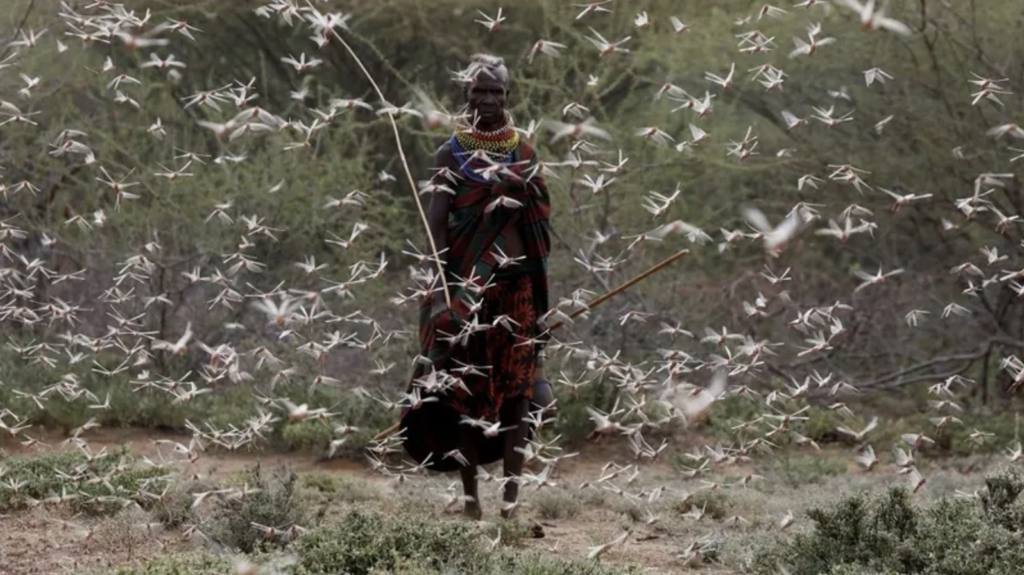
Further west from here are the Elephant-fighters, who wait for elephants to wander individually in order to attack them one-on-one with cunning techniques and eat their meat after the animal has fallen. Nearby also live the Acridophagians, who eat locusts of large and unusual size. They set fire to the brush in a ravine that the locusts fly over, and the smoke chokes them until they fall down, after which they soak them in brine so that they are good for consumption. Agatharchides tells us that they experience terrible misfortune when they become older, for lice begins to grow inside the body. At first, it only causes irritation that is often dealt with by scratching themselves, but soon after, it becomes so bad that vermin pours out of their nose, and their scratches turn into lacerations until what is left is a cut up, screeching old man, secreting lice from all orifices of his body. Not far from the Acridophagians is a land that receives an abundance of rain so great that it creates a perfect environment for venomous spiders and scorpions. The quantity of these creatures was so overwhelming that any Ethiopian population here was forced to leave.
Troglodytes: Lifestyles and Diets
Further south now, we reach the so-called Troglodytes. The distinction between these people and the other Ethiopian tribes is relatively consistent among Agatharchides and Diodorus Siculus. However, Strabo notes that the Troglodytic country actually encompasses the land of the Elephant-hunters and others. Herodotus, as we already noted, also replaces the term “Troglodyte” with “Ethiopian cave dweller.” The demarcation between Troglodytes and Ethiopians, then, can be rather blurry, so we will choose to conform to that given by Agatharchides for clarity as this dividing line is the most detailed.
Troglodytes are said to be nourished by animals rather than their actual parents. As a result, they refer to cows and sheep as their fathers and mothers. They put women and children on the same level as their flocks. They base their nomadic migrations on the movements of their herds. Anytime a man has sex with the wife of the group ruler, he pays the ruler with a number of sheep. Their food consisted of snakes, lizards, and other reptiles. Some that live by the coast eat unusual animals from the sea like dog-fish or sea-eels, creatures with which the Greeks and Romans were unfamiliar. They baked this seafood on top of rocks in the sun. If they had no immediate access to meat, they would eat the backbones of the animal, breaking them off at the joints and grinding at them with their teeth like a beast, we are told. Their lifestyle and diet, therefore, was significantly influenced by the animals around them, as was the case for the other Ethiopians discussed earlier.
They apparently tied the bodies of their dead with buckthorn branches and covered them with a heap of large stones, placing a goat horn on the top. Afterwards, they forgot about the body, and continued on as if it never existed. They fought each other over pasturage for their animals by throwing stones or shooting bows and arrows, only stopping at the presence of an old woman intervening in the line of fire, as they would never want to harm her. Old age eventually hinders their abilities to tend to their herds, and so out of their own free will they hang themselves using ox tail wrapped around their neck to perform this customary suicide.
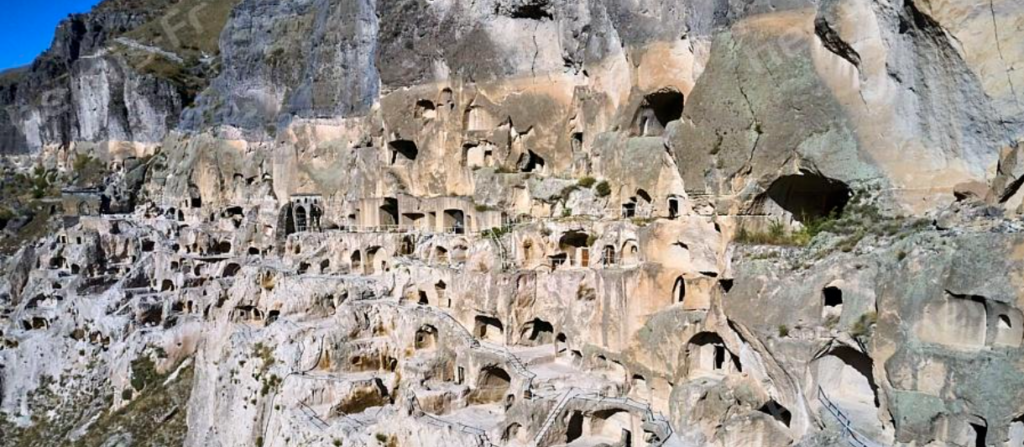
Diodorus claims that they know only the barbaric senses of pleasure and pain and lack an understanding of disgrace or honor. They do not suffer from thirst given their nature living in the desert. Their dwellings are often caves that face north or shelters made by the thick foliage of olive trees to provide shade. Some of them are even on crags over the sea that are impossible to reach from the tops of the cliffs due to steep overhangs or from the bottom since they had no knowledge of rafts or boats that could lead them up there. The conclusion, then, is that these people didn’t find their way into these crags, but rather that their population sprang up there from the beginning of time, having never left these spots.
Separating Falsehoods from the “Truth”
So, we have encountered people who jump from tree to tree and suffer no injuries from falling, who spar with elephants single-handedly, who are raised by animals rather than their own tribe, and who’ve developed their entire population inside a crack on a cliffside. To what extent are any of these claims true? If these aren’t true, then what can we even say about the more mild claims? Are those even true?
Of course, we can reduce many of these statements to being exaggerations. The Hylophagians may have been good climbers, but their ability to jump on flimsy branches is much more questionable. The Troglodytes’ heavy reliance on their animals to dictate their lifestyle may easily introduce unusual remarks regarding the relationship between people and animals. It is very unlikely that infants would’ve left their mother’s milk for that of cows or sheep since they cannot digest it. Their residencies in cliffsides may be distortedly represented as being unreachable while that was certainly not the case. Even the idea of people living in these crags could be completely false: if Diodorus can spot them in such dwellings, why wouldn’t he be able to see them go in and out of them?
However, analyzing many of these other statements on the Ethiopians and Troglodytes become more complicated when we look at conflicting stories elsewhere. Agatharchides makes an aside after discussing the land of venomous spiders and scorpions to explain that the idea that such a land exists isn’t as unbelievable as one may make it out to be. Perhaps to an ancient Greco-Roman audience, the idea of such an uninhabitable land may appear rather unusual, but Agatharchides asserts that there are environments just as wild as this one in Europe. He likens this insect infested desert to the land of the Autariatians, who eventually saw frogs fall out of the sky instead of the usual rain and were forced to leave after the invasion. Another similar case involves the Stymphalian lake where Heracles forced all the birds there to flee as part of an initiation process towards his immortality. The occurrence of frogs falling out of the sky or divine intervention causing previous exoduses justified the truth for his claim about this land in Africa. If these were his grounds for accuracy, we wouldn’t believe that it actually was true.
Herodotus, too, briefly talks about these Ethiopian cave dwellers, and that they were chased by the Garamantes using four-horse chariots to chase them since they were faster than horses. Yet, in a previous passage, he says the Garamantes try to avoid all human interaction. They don’t have any weapons and cannot defend themselves. At least one of these tales, then, is wrong. If they don’t possess weapons and avoid other humans, then why would they go hunting after a whole tribe? It could be that Herodotus mistook the name or location of one group of people for another, or it could be that Herodotus made up a story to make the account more interesting. Of course, the idea that Troglodytes ran faster than horses is physically impossible. It is then worth mentioning, did Troglodytes even exist at all?
It may very well be, as we’ve touched upon earlier regarding the distinction between Troglodytic and Ethiopian, that Herodotus’s distinction of Troglodytes is much different compared to that of other historians, where in Herodotus’s sense, these cave dwellers were more like humanoid creatures, while Roman geographers remark them to just be actual people south and west of the Ethiopians. In fact, Clement of Alexandria discusses in his Stromata that barbarians were both the inventors of philosophy and art. One group of barbarians he mentions were these troglodytes, saying that they created the sambuca, a musical instrument that made its way to Egypt, Greece, and all over the Ancient world. The likelihood that Herodotus’s speedy and screeching beasts were related to the people who made bows and arrows and sophisticated instruments is most certainly zero.
Identity of Troglodytes and Ethiopians through the Greco-Roman Lens
Thus, we end up with one more question: how sure are we that these historians and geographers actually visited these places they wrote about? The issue with Diodorus regarding the cliffside residents, Agatharchides regarding the land of insects, and Herodotus regarding the conflict between the Garamantes and the cave dwellers may lead us to believe that they may have only visited a fraction of the places they even talked about while relying on local word of mouth or imagination to fill in the rest. Therefore, we end up playing this game of what is true, or somewhat true, and what is fantasy. Of course, being conservative and assuming everything is fabricated would also be inaccurate, as it would be difficult to believe that various historians mention the same type of people in the same lands across different time periods, especially given the significant overlap between Agatharchides and Diodorus as well as that between early common era historians. So, if we assume these overlapping points to be true, despite the distortion of that truth based on the biases of the viewpoints remaining to us and the likelihood that some of these points may still not be true at all, then the best that we can conclude is perhaps the following.
The Phoenicians, Greeks, and Romans identified Ethiopians as sedentary peoples who base their lifestyles and survival on a certain animal, most notably the cow. Meanwhile, they identified “troglodytes” as nomadic peoples who base their lifestyles and survival on a variety of animals, both from land and sea. Their presumed primitive nature suggests that their primary tools were understood to be rocks, fires, and clubs. It would even seem that their own people were more of a hassle to one another than an actual help, given that they consistently fought against themselves. Essentially, they were represented by Greek and Roman authors as being animalistic and barbaric.
Such consistent emphasis concerning the identity of the so-called “troglodytes” conforms to the ideological differentiation that the Greeks and Romans sought to maintain between the apparent sophistication of Greco-Roman civilization and the African tribes and their associated nomadic behaviors. Emphasizing the frequency of violence towards between these tribes, for instance, was an attempt by the Greeks and Romans to establish and maintain the notion that they were superior to the so-called “troglodytes”, that Greco-Roman civilization provided peaceful relations while tribal society did the opposite. With these ideological implications in full view, we may start to understand better some parts of the ancient historians’ inaccurate accounts. The desire to depict Elephant-fighters wanting to kill elephants on their own rather than with others or Troglodytes treating animals as their parents, both of which we deemed earlier to be stretching the truth, played a role in creating this barbaric identity. In reality, it would be hard to believe that these tribes didn’t have tighter relationships within their communities given the survival situation their lifestyle requires. While we deemed Herodotus’s accounts as being false and fanciful, what still seems to remain given this identity is his word for Troglodytes: cave dwellers. In the end, “cave dweller” sums up the iconic example of primitivity that these people possess in the view of the Phoenicians, Greeks, and Romans, as if these Troglodytes were the same as cavemen from prehistoric times.
In fact, when Romans first discovered the continent of Africa, the first people they came across were an Amazigh tribe known as Afri, which means “cave dweller.” The origin of the name for the continent was, therefore, Africa, “land of the cave dwellers.” To this day, even the definition of Africa as a whole remains equivalent to the Greek connotation of Troglodytes. Given that even the basic facts of our knowledge about ancient African tribes is tainted by such ideological desires to depict Greco-Roman civilization as superior to all other forms of society, we must remain skeptical when confronting such fanciful accounts as presented by Herodotus, Hanno, Agatharcides, Diodorus, and Strabo.
References
- Agatharchides of Knidos. “Ethiopians: Agatharchides and Diodoros on lifestyles and diets in the extreme south (second-first centuries BCE)”. Ethnic Relations and Migration in the Ancient World. Translated by C. H. Oldfather. 1952. http://www.philipharland.com/Blog/2022/11/ethiopians-agatharchides-and-diodoros-on-lifestyles-in-the-extreme-south-mid-second-century-bce/.
- Clement of Alexandria. Book 1: Chapter 16. The Stromata. Translated by William Wilson. https://www.logoslibrary.org/clement/stromata/116.html.
- Diodorus Siculus. Book III. The Library of History of Diodorus Siculus. Loeb Classical Library. Vol 2, 1935. https://penelope.uchicago.edu/Thayer/E/Roman/Texts/Diodorus_Siculus/3B*.html.
- Hanno. Periplus. Livius. 1998. https://www.livius.org/articles/person/hanno-1-the-navigator/hanno-1-the-navigator-2/.
- Herodotus. Book II: Chapter 1-98. Herodotus. Loeb Classical Library. Vol 1, 1920. https://penelope.uchicago.edu/Thayer/E/Roman/Texts/Herodotus/2a*.html.
- Herodotus. Book IV. The Histories. Translated by A. D. Godley. Cambridge. Harvard University Press. 1920. http://www.perseus.tufts.edu/hopper/text?doc=Perseus%3Atext%3A1999.01.0126%3Abook%3D4&force=y.
- Strabo. Book XVI: Chapter 4. The Geography of Strabo. Loeb Classical Library. Vol 7, 1932. https://penelope.uchicago.edu/Thayer/E/Roman/Texts/Strabo/16D*.html.