by Moira Rankin
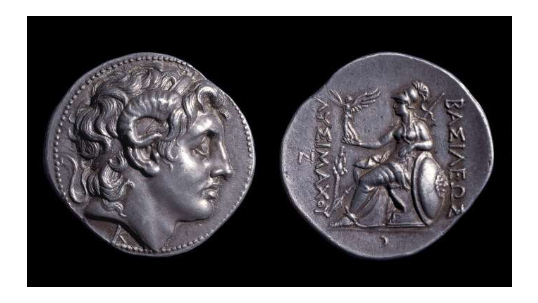
When was the last time you used a coin for anything other than feeding your couch cushions? In the modern age of credit cards and contactless transactions, people rarely notice let alone take the time to examine depictions of prominent historical figures featured on coinage. Contrastingly, civilizations dating to early antiquity, though advanced in their sociopolitical and economic structures, were still millennia away from chip-reading and Venmo. Thus, coins of the ancient world enjoyed greater movement and more meaningful exchanges than those of the modern world, a fact largely facilitated by and accredited to Alexander the Great and his successors.
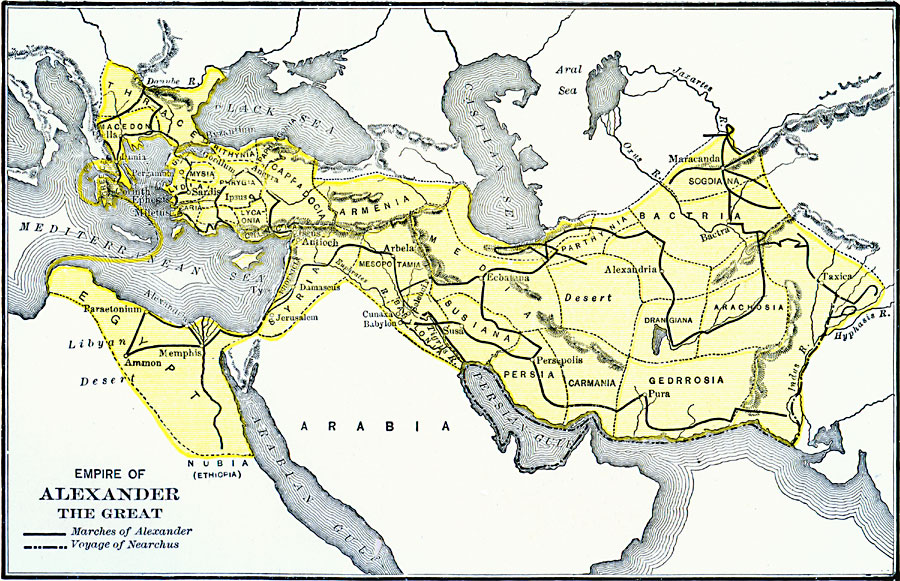
During his Asian campaign from 343 – 332 BCE, Alexander sought to eradicate the Persian empire, crusading across continents and expanding his empire from Greece to Persia, Babylon, Egypt, and beyond. While the Macedonian king’s conquests funded his movements, he came to rely upon an increasingly mercenary army as his empire continued to grow (Meadows, 2014, 171). In standardizing a new Attic weight currency, Alexander the Great created a common coinage that was acceptable throughout his far-reaching kingdom and that served as a convenience for mobile soldiers (Burn, 1965, p. 151). Additionally, by issuing across the entire empire the same designs of coinage that illustrate a deified Alexander mimicking venerated gods, the Macedonian administration asserted his divine right to kingship as well as his militaristic superiority (Meadows, 2014, p.172-173).
Alexander the Great’s crusade against the Persians led him to Egypt where he liberated the indigenous population from the Achaemenid dynasty of the First Persian Empire. Prior to the Macedonian king’s appearance, Greeks had already begun settling in Egypt and interacting with the Egyptians commercially (Hay, 2022). Upon his arrival, Alexander established sovereignty over the population in a dominating endeavor to create a Greek colony for military garrisons and to actively implant his own culture into Egyptian society. Essential to his colonizing introduction of Macedonian tradition were his coined representations. To the modern eye, some of the conqueror’s minted features—namely his ram’s horns—may seem like superfluous embellishments, but the power of such iconography is made clear by Alexander’s journey to Libya shortly following his liberation of Egypt.
Coinage, as one of the few mass-produced objects of the
– Andrew Meadows, The Spread of Coins in the Hellenistic World, p. 173
ancient world, thus occupied a privileged place in the discourse between king and
subjects. As a result, coinage became perhaps the pre-eminent tangible sign to
many of the inhabitants of Alexander’s empire that they were within that empire.
Alexander the Great’s trek to Siwah, a Libyan oasis that shelters the temple and oracle of Zeus-Ammon, helped to solidify his iconographic authority. The Macedonian king sought to consult the oracle because he desired to trace his ancestry to Ammon—the Egyptian king of deities—just as his rivals Heracles and Perseus traced their heritage to Zeus—the Greek king of deities (Holmes, 2022). Alexander’s successful journey across the barren desert whilst accompanied by his massive army became a revered feat explained only by divine intervention. Upon their safe arrival in Siwah, the oracle addressed the conqueror, but its mouthpiece did not speak Greek. According to Plutarch, a single mistranslation led the Macedonian king to believe that the deity named him the son of Zeus (Plutarch Lives). The misinterpreted declaration combined with his miraculously smooth trek through such a hostile environment led Alexander the Great’s administration to advertise his divinity by portraying him as the god Zeus-Ammon—a deity often depicted with a pair of ram’s horns.
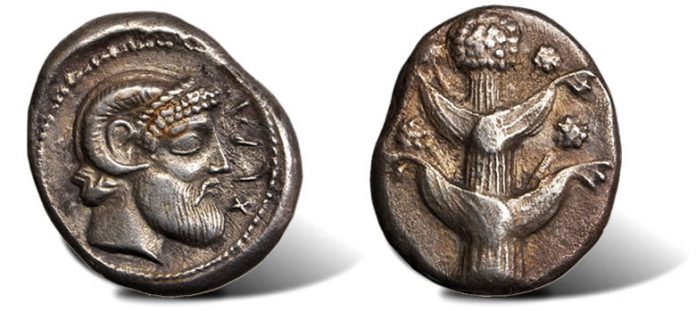
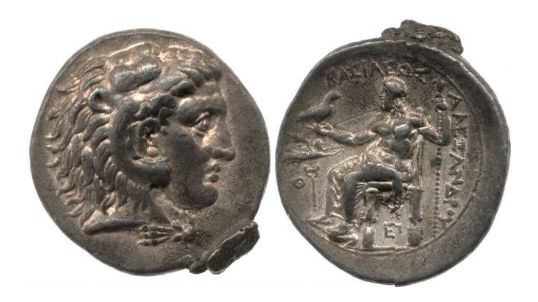
Included in the caravan to Siwah was Ptolemy I Soter, a friend and biographer of Alexander the Great. Ptolemy’s close relationship with the conqueror proved advantageous when Alexander died in 323 BCE, not even a decade after his campaign. Because his death followed so shortly after he conquered so much, Alexander the Great’s extensive empire was thrown into disarray, leading to infighting amongst the generals and lieutenants left in charge of different regions within the myriad of Alexander’s conquered territories (Bosworth, 2010, p. 216-217). The Partition of Babylon ultimately divided Alexander’s empire into Greek city-states that were ruled by the late king’s most prominent commanders. The lucky successor who inherited Egypt was none other than Ptolemy I, who became the first sovereign of the civilization’s Ptolemaic Dynasty.
When it came to coins and their Alexandrian iconography, the late king’s heirs changed little after his death. Hellenistic kings of Macedonia, Thrace, and Syria joined Egypt in continuing to produce the same coinage displaying Alexander’s divine likeness as if the conqueror were still alive and his empire still whole (Meadows, 2014, p. 184-185). By maintaining the circulation of such a powerful iconographical tool, Alexander’s successors displayed their initial reluctance to acknowledge the changing political structure of a once-great empire. However, as rising tension between Hellenistic heirs transformed the divvied territories into rival states at the end of the 4th century BCE, coins changed from representations of a deified Alexander to portraits and family insignias of their respective successors (Meadows, 2014, p.185). Thus, the façade of a unified empire despite the passing of Alexander the Great became clear as the uniform appearance of royal Hellenistic coinage shattered.
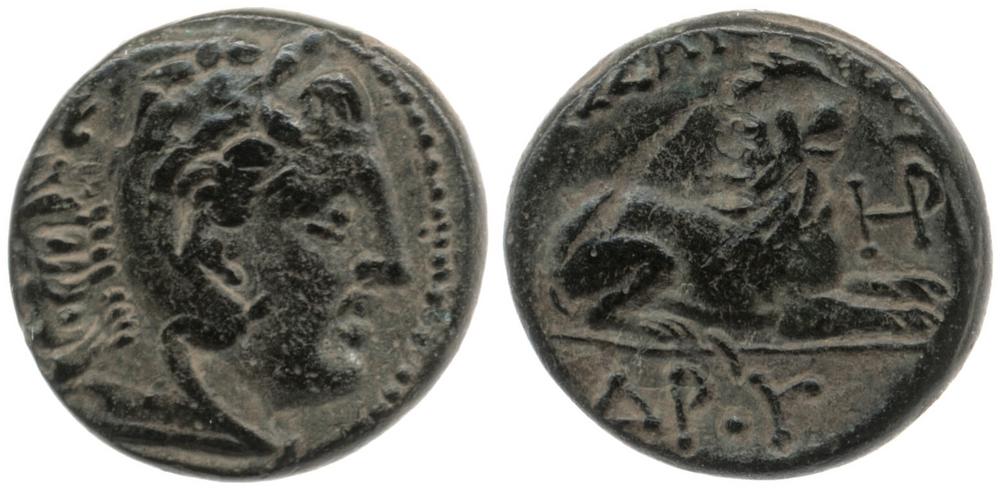
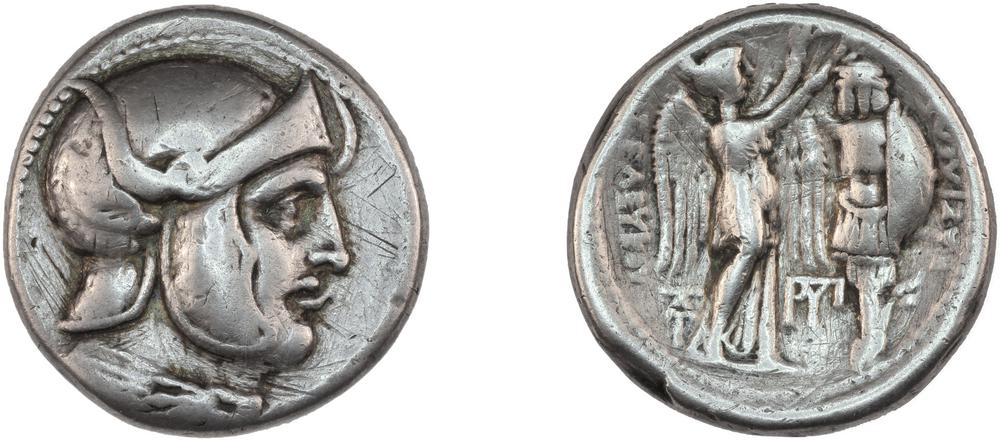
Ptolemy I became the first of many Greek-originating Pharaohs in Egypt’s longest foreign-led dynasty (Vandorpe, 2010, p.159). While many Egyptian religious and sociopolitical institutions maintained similar structures as the immigration of Greek settlers and soldiers intensified following the establishment of Ptolemy’s sovereignty, Greek-speaking foreigners now held the power in the Ptolemaic aristocracy. In addition to introducing Greek as the major administrative language, Macedonian Egypt implemented a cash—coin—economy (Vandorpe, 2010, p.177). Although annual taxation of produce was still in-kind, coins became required for special taxes and payment of troops. Coinage transformed into a new and powerful tool for Egypt both in its standardized versatility with regard to international trade and its convenience for paying Egypt’s new army (Meadows, 2014, p.181).
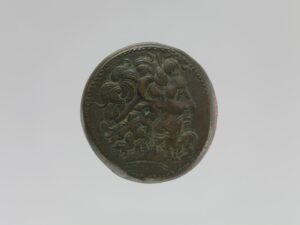
In stark contrast to the coinage of the last native Egyptian dynasty under Pharoah Nectanebo II, the iconography of Ptolemaic coinage served as propaganda to establish Ptolemy I and his descendants as the legal successors of Alexander the Great (Curtis, 1957, p.74). As opposed to representations of native Egyptian culture, the mimicry of Alexandrian coin iconography by Ptolemaic coinage attempted to argue for the Ptolemies’ similarly divine right to rule. However, coins did not just change on an iconographic level. With no indigenous source of silver, the Ptolemies broke from Alexander’s established Attic weight and created a closed currency system by reducing the standardized silver weight, thus trapping the rare metal within Egypt (Meadows, 2014, p.186). By ensnaring the new currency in Egypt, the Ptolemaic dynasty created a clever system that facilitated the exclusive dissemination of their iconography. When they donned Alexandrian curls, royal Macedonian diadems, and Zeus-Ammon’s horns on their circulated coinage, the Ptolemies legitimized themselves as rulers, claiming divine descendance from Alexander the Great and hybridized Greek and Egyptian deities.
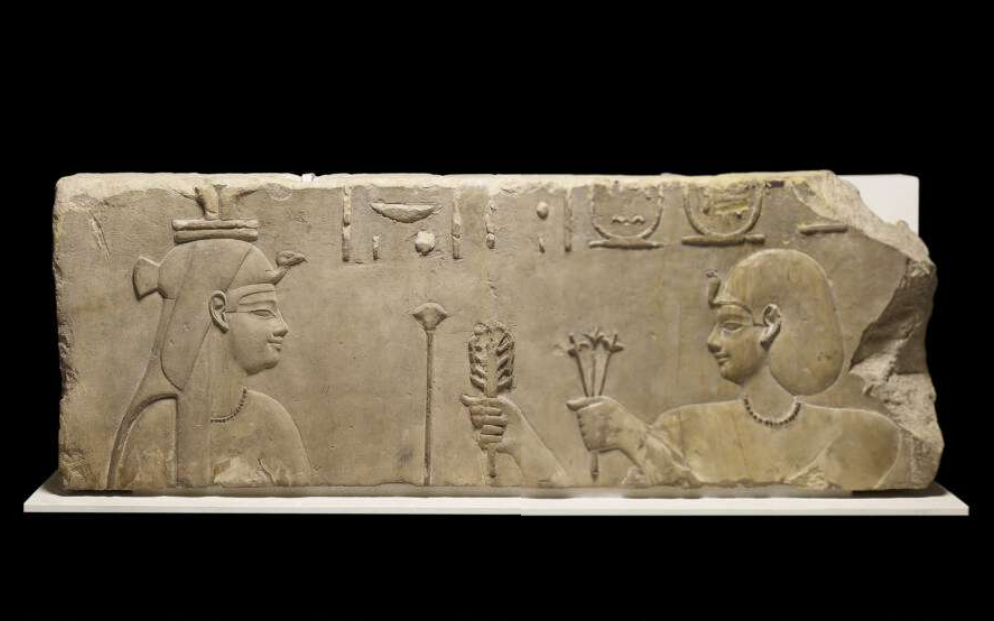
In introducing demographic, economic, and sociopolitical changes to one of antiquity’s longest-standing civilizations, the Ptolemaic kings of Egypt functioned as living symbols of a double society (Vandorpe, 2010, p.171) The Ptolemies used iconography as a powerful tool, depicting themselves as subjects of both Egyptian and Greek dynastic cults to maintain sovereignty in their delicately-balanced society. In the countryside where indigenous Egyptians resided, illustrations of the Ptolemaic kings as pharaohs donning traditional royal garments covered temple walls, imbuing onlookers with the same reverence for the Ptolemies that they held for preceding pharaohs. With no concrete method of mass communication, so long as the Ptolemies presented themselves to indigenous Egyptians as the pharaohs before them had traditionally appeared, the Alexandrian successors were accepted as akin to earlier, native pharaohs. Such was the authoritative influence of iconography.
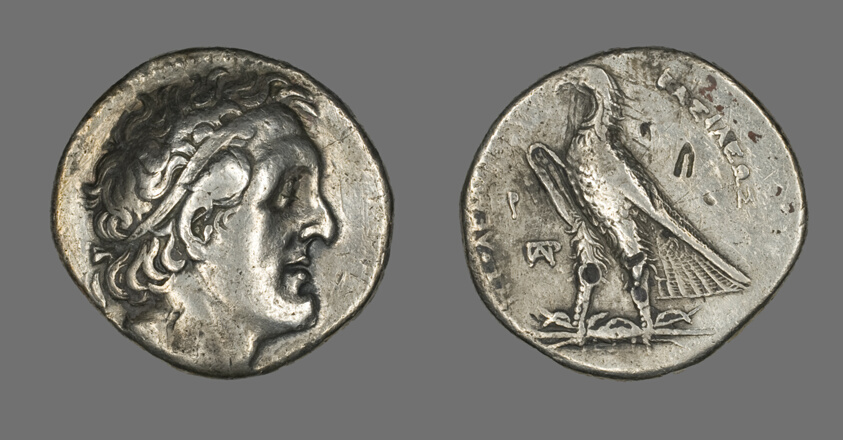
The Ptolemaic dynasty similarly appealed to their Greek audience. When presenting themselves as subjects of the Greek dynastic cult, the Ptolemies followed Alexander’s example by depicting themselves as Macedonian kings donning curly hair and time-honored diadems. The decision of the Ptolemaic dynasty to continue using coinage as a method of iconographical dispersal proved effective as this metallic money must have been used by the majority of the Egyptian population, including the lower classes. In the ancient world where there was no comprehensive print medium, the mass communication of images relied on other instruments—most notably coins (Meadows, 2014, p.173). By illustrating themselves as Macedonian rulers, the Ptolemies first evoked the divine associations that Alexander the Great established via his own coinage before literally placing these images in their subjects’ hands.
While Alexander the Great’s Macedonian legacy undoubtedly influenced the power dynamics of Egypt, the cultural exchange between Egyptians and Greeks was a two-way street. Ancient Egypt granted women more freedoms than they held in ancient Greece; women in Egypt maintained control of the belongings they accumulated prior to marriage—an occasion for which there was no official word or ceremony—and in addition to the men paying a dower, divorce was not an uncommon practice (Johnson, 2002). Iconographically, the depiction of women on Ptolemaic coinage affirms the population’s acknowledgment of the existence of powerful females, thus reflecting Ptolemaic Egypt’s cultural hybridity (Bhabha, 1984).
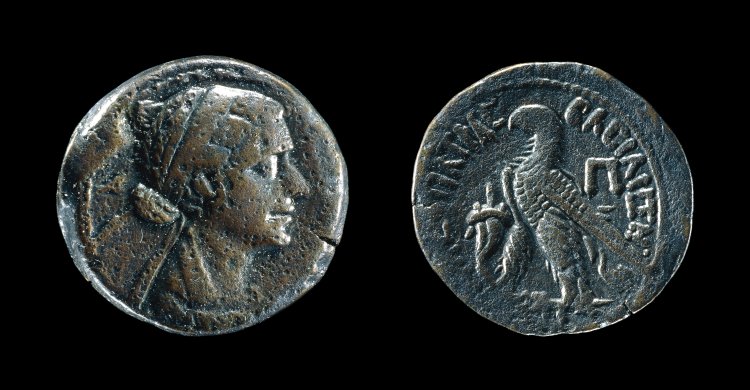
Cleopatra VII is arguably the most well-known woman of Ancient Egypt and the mechanisms of her iconography are similar to those of her male counterparts. Indigenous Egyptian art illustrates her as any other pharaoh, depicting her likeness dressed in the same pharaonic garb and accessories on everything from colossal reliefs to basalt statues. On the other hand, marble busts and coins present a classically Greek version of the renowned ruler, illustrating Cleopatra as the female double of Alexander (Vandorpe, 2010, p.167). Interestingly, while Alexander the Great and his predecessors mimic the divine imagery of Zeus-Ammon, Egyptian and Greek representations of Cleopatra VII during the Ptolemaic period depict her as Isis and Demeter, respectively. Like the hybrid concept of Zeus-Ammon, Isis-Demeter is the combined manifestation of the Greek and Egyptian deities of fertility and motherhood (Pincock, 2010).
Turning to another Ptolemaic queen, recent iconographic studies of Ptolemaic coinage have centered on the discovery of a unique bronze coin that depicts what Egyptologists have determined to be the head of Cleopatra I as Isis (Pincock, 2010). Her minted corkscrew locks are a style characteristic of Isis and serve to assimilate the Ptolemaic queen into the hybridized goddess. In place of Macedonian diadems donned by Alexander, the Ptolemies, and other Hellenistic heirs who depicted themselves on coinage, the queen models a wreath of wheat. The agricultural diadem reinforces associations between Cleopatra and Isis-Demeter by evoking the established Greek iconography of Demeter whose symbol is a stalk of barley (Pincock, 2010, p.55-56). At first glance, this deification seems to suggest comparable power standings between male and female rulers of this period. However, while Ptolemaic queens enjoyed greater degrees of power than their Greek predecessors, the female rulers nonetheless depended on their male counterparts to hold iconographic influence.
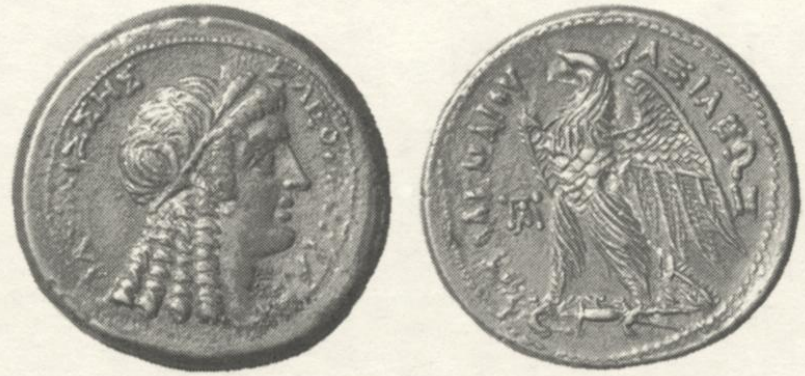
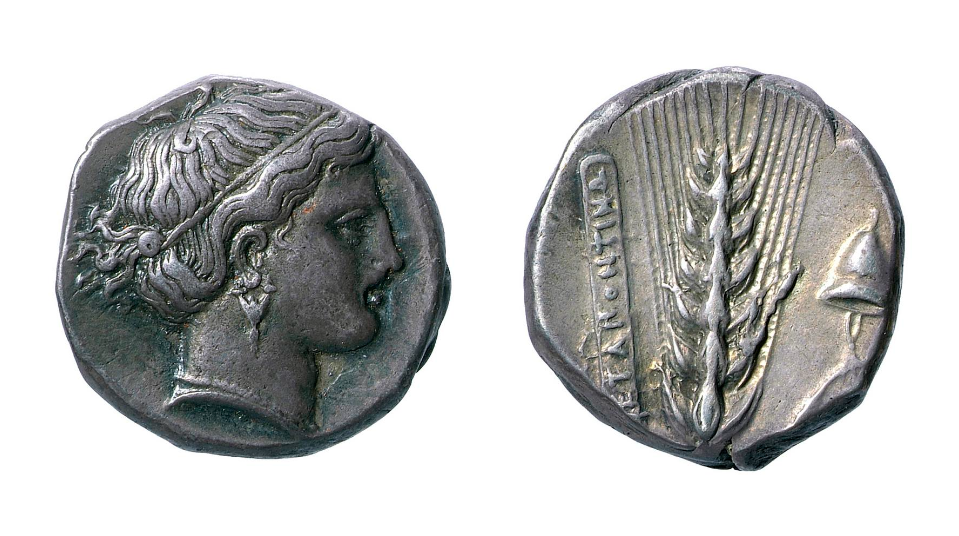
Although some unique coins depict a lone Cleopatra VII and others present Cleopatra I as Isis-Demeter, such iconography on coinage was rare. In the modern world, many of us perceive Cleopatra VII as an authoritative, feminist figure of antiquity. But, the Ptolemaic queen depended on her male lover to maintain iconographic power in Ancient Egypt; her likeness on coinage was essentially a feminine copy-and-paste of Mark Antony‘s Alexandrian-curled head. In a similar manner, Arsinoe II was predominantly minted on the same side of the coin as her husband-brother, Ptolemy II. While other queens typically enjoyed their own side of Ptolemaic coinage, Arsinoe II mimicked the Alexandrian representation of her male partner and she did so with the majority of her face hidden behind Ptolemy II’s deified iconography. Also, the more typical coined depiction of Cleopatra I illustrates the queen on the other side of her son’s Macedonian image. Her veiled head dons a Stephane—a symbol characteristic of ancient Greek royal and divine iconography—which serves to pervasively represent this Ptolemaic queen as a deified Macedonian woman (Hamelink, 2014, p.13). Thus, iconographic representations of Ptolemaic queens, while propagating the coined deification of Alexander-descended rulers, do not hold as much individual influence as those of Ptolemaic kings whose likeness much more closely resembled their ancestors Alexander and Zeus-Ammon.
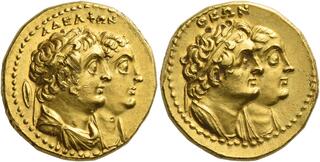
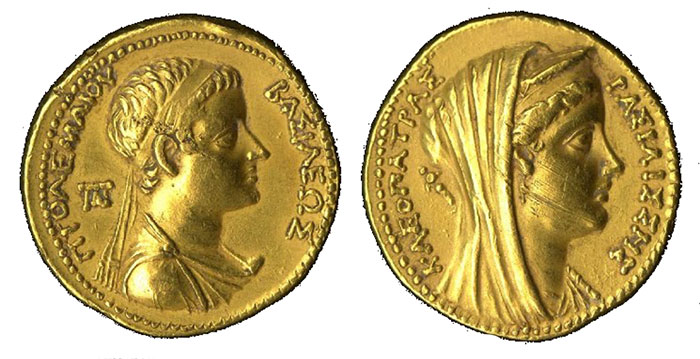
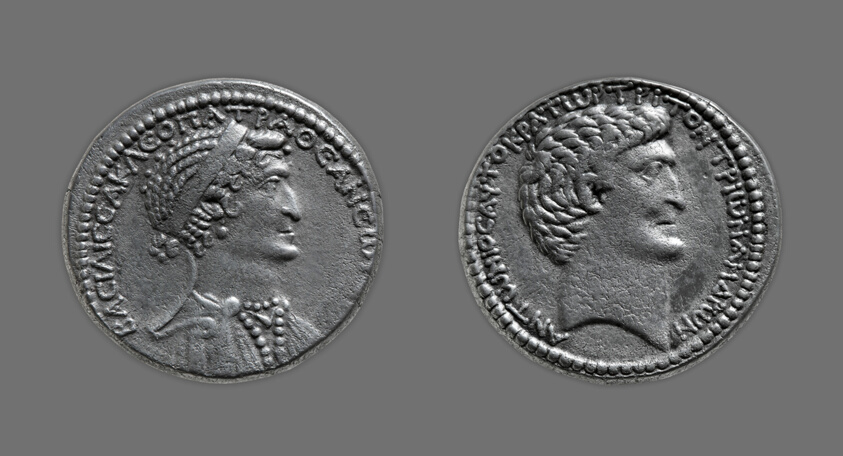
From Ptolemy I to Cleopatra VII, the Ptolemaic dynasty survived as one of Ancient Egypt’s most iconographically influential periods—an accomplishment largely accredited to its coinage. Today, the notion that such tiny pieces of minted metal could hold such authority over entire civilizations may seem absurd. However, when we trace coined iconography from Alexander the Great’s mimicry of Zeus-Ammon to his Hellenistic heirs’ mimicry of him, we understand the efficacy of depicting such representations on an item essential to everyday interactions. Although we discussed a wide range of Ptolemaic rulers who enjoyed illustrations of their likeness on coinage, there are entire databases available where you can find more cases of Ptolemies imitating Alexandrian coinage. And, if you would rather examine these coins personally, online auctions also sell a number of original pieces. While quarters and dimes may not hold as much iconographic power as the coinage of antiquity, it may be worth taking a peek at their illustrations before you condemn your change to an eternity of cycles in the washing machine.
References
Bhabha, Homi. 1984. “Of Mimicry and Man: The Ambivalence of Colonial Discourse” Discipleship: A Special Issue on Psychoanalysis 28: 125-133. The MIT Press. https://www.jstor.org/stable/778467.
Bosworth, Albert B. 2010. Alexander the Great in Fact and Fiction. Oxford: Oxford University Press. https://doi.org/10.1093/acprof:oso/9780198152873.001.0001.
Burn, A. R. 1965. “The Generalship of Alexander.” Greece & Rome. Cambridge University Press on behalf of The Classical Association 12(2): 140-154. https://www.jstor.org/stable/642311.
Curtis, James. 1957. “Coinage of Pharaonic Egypt.” The Journal of Egyptian Archaeology 43: 71-76. Sage Publications, Ltd. https://www.jstor.org/stable/3855280.
Hamelink, Anique. 2014. “Symbol or Jewelry? The Stephane and its Wearer in the Roman World (1st – 3rd Centuries AD).” Bachelor’s thesis under the supervision of Dr. H. Stoger and Dr. L.M.G.F.E Claes, Leiden University. https://studenttheses.universiteitleiden.nl/access/item%3A2659805/view.
Hauben, Hans. 2016. “Army and Society in Ptolemaic Egypt: From Invasion to Integration.” Review of Army and Society in Ptolemaic Egypt by Christelle Fischer-Bovet, The Bulletin of the American Society of Papyrologists 53: 395-409. https://www.jstor.org/stable/pdf/44968458.pdf.
Hay, Malin. 2022. “Historical Links between Egypt, Greece, and Rome, with Katherin Blouin and Rachel Mairs.” Interview by Shivaike Shah. Khameleon Classics, iHeart Radio, April, 2022. Audio, 42:45. https://www.khameleonproductions.org/egypt-greece-and-rome.
Holmes, Robert C.L. “What Happened When Alexander the Great Visited the Oracle at Siwa?” The Collector. Last modified January 19, 2022. Accessed November 16, 2022. https://www.thecollector.com/alexander-the-great-oracle-siwa/.
Johnson, Janet. 2002. “Women’s Legal Rights in Ancient Egypt.” Fathom Archive. The University of Chicago Library Digital Collections. https://fathom.lib.uchicago.edu/1/777777190170/#:~:text=If%20a%20man%20divorced%20his,both%20were%20free%20to%20remarry.
Meadows, Andrew. 2014. “The Spread of Coins in the Hellenistic World.” In Explaining Monetary and Financial Innovation: A Historical Analysis, edited by Peter Bernholz and Roland Vaubel. Financial and Monetary Policy Studies 39: 169-195. http://www.moneta-coins.com/library/Coins%20in%20the%20Hellenistic%20World_A%20Meadows.pdf.
Pincock, Richard. 2010. “A Possibly Unique Isis Head Bronze Coin of Cleopatra I (180-176 BC).” The Numismatic Chronicle 170: 53-62. Royal Numismatic Society. https://www.jstor.org/stable/42678882.
Plutarch. Plutarch Lives, VII, Demosthenes and Cicero. Alexander and Caesar. Translated by Bernadotte Perrin Harvard University Press, 1919. Cambridge, Massachusettes. https://www.perseus.tufts.edu/hopper/text?doc=Perseus%3Atext%3A1999.01.0243%3Achapter%3D27.
Tobin, Vicent Arieh. 1991. “Symbols of Divine Motherhood”. Journal of the American Research Center in Egypt 28: 187-200. American Research Center in Egypt. https://www.jstor.org/stable/40000579.
Vandorpe, Katelijn. 2010. “The Ptolemaic Period”. In A Companion to Ancient Egypt, edited by Alan B. Lloyd, 159-179. Malden, Massachusettes: Blackwell. https://doi.org/10.1002/9781444320053.ch9.
Worthington, Ian. 2010. “Alexander the Great, Nation Building, and the Creation and Maintenance of Empire.” In Makers of Ancient Strategy, edited by Victor Davis Hanson, Princeton University Press, 118-137. https://www.jstor.org/stable/j.ctv6zdcgk.9.