By Kokie Dhuguma
What is the Controversy?
There has been a longstanding controversy regarding ‘race’ and the role it should (or shouldn’t) play in Ancient History. While some argue that race offers traits that help identify ancient relationships, others argue it’s a modern word that doesn’t belong in the Ancient world.
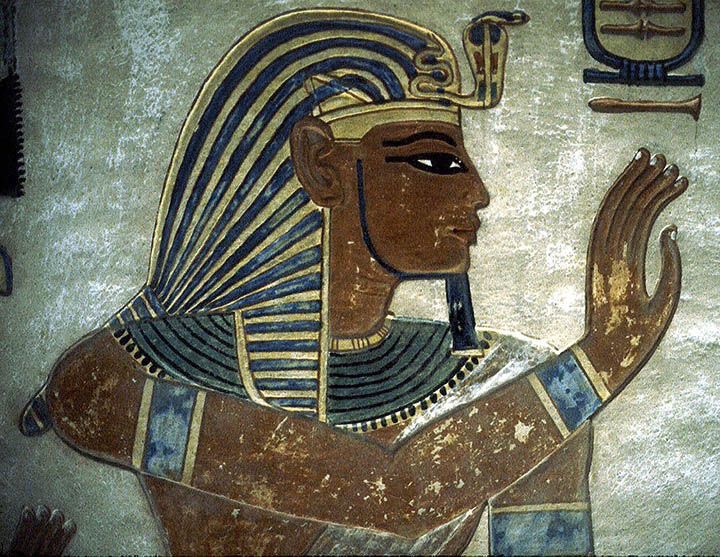
The benefits of using current ideas to relate to societies that are nearly impossible to understand otherwise are understandable, but it also forces connections that don’t exist and makes assumptions that aren’t rooted in truth. Can Ancient Egyptians be racist if race wasn’t a concept that had been created yet? What do we really gain from using the term ‘race’ instead of something like ‘ethnicity’?
Take Things As They Are
Ancient Egyptians didn’t have the concept or understanding of ‘race’ that we do today in our post-colonial society. It seems that these ancient societies based their differences on cultural practices, geographical location, and belief systems understood today to be ‘race’. Ancient Egyptians didn’t understand racial distinctions; it’s irresponsible to use the categorization of race merely because of convenience. With race comes history and relation.

Being human, it is natural to want to make sense of our surroundings, and while this can lead to revolutionary findings, it can also lead to dangerous and incorrect claims for the sake of ease. In terms of Ancient Egyptians, many ancient historians “simplify the narrative of Egyptian race, using it as a source of assurance and comfort rather than debate.” Ancient historian Denise Eileen McCoskey wishes to “reintroduce race…as a way of drawing attention to the simultaneous survival of ideological structures that continue to associate the category of ‘Greek’ with domination and that of ‘Egyptian’ with dominated.” McCoskey has a scattered and irresponsible where she uses components of the meaning of “race” which are helpful to her and her argument while disregarding everything else that comes with ‘race.’ “If race is not just one thing, then the methods used to approach it cannot be either.” Words like ‘race,’ cannot be used without the context of colonialism and events surrounding it. Using ‘race’ in relation to Ancient Egypt solely because it seemingly parallels the ‘dominant and “dominated”’ aspect of race relations in modern society does not grant clearance to continuously use race as a descriptor in situations lacking the necessary context.
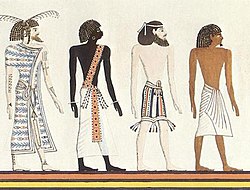
While people like McCoskey believe ethnicity is too overemphasized, it seems to be the prevailing categorizer of the ancient world. Divisions were based on cultural practices and place of residence rather than skin color and facial features.
Bibliography
- https://medium.com/@josephkamandakimonambinga/kemet-as-black-african-civilization-and-multiracial-society-cc0cf22e8dde
- McCoskey, Denise Eileen. “[PDF] Race Before ‘Whiteness’: Studying Identity
- in Ptolemaic Egypt: Semantic Scholar.” Race Before “Whiteness”: Studying Identity in Ptolemaic Egypt: Department of Classics, Miami University, Ohio, 1 Jan. 1970, https://www.semanticscholar.org/paper/Race-Before-%E2%80%9CWhiteness%E2%80%9D%3A-Studying-Identity-in-Egypt-McCoskey/76d85726dd2582faea98d30f0eac92c44d762bf1.